
Important links
Abstract
Why do economic sanctions so rarely produce democratization, and when should we expect them to succeed? I model an autocracy in which elites and masses weigh the costs of sanctions, conflict, and democratization, separating elite from mass costs and treating conflict as destructive. The model identifies two paths, one in which sanctions embolden the masses and one in which they move elites directly, so democratization can begin without pressure from below. Using the Global Sanctions Data Base and the Episodes of Regime Transformation data, I find that sanctions concentrating costs on elites, and more robustly those pursuing regime-related objectives, are associated with the onset of democratization episodes. The elite-instrument association weakens once targets are matched, while the regime-objective association survives fixed effects and matching. Trade sanctions show no such effect, and none predicts a completed transition. The mixed record reflects heterogeneous paths rather than the absence of an effect.
The Model
I begin by explaining the assumptions of the model. These assumptions have two key implications: (1) the strategic decisions of the masses determine what the game would be. Also, (2) the relative power between the elites and masses affects the strategic decision making of both. The Game describes each model, whether sanctions target the elites or the masses.
General Assumptions
I assume that individuals in targeted states are members of one of two classes, indexed E and M. E denotes the elites and M means the masses. Here, I present a set of terms to show the strategic behaviors between the E and M in the two different games. The denotation is determined arbitrarily. Also, I assume that the purpose of sanctions is to constrain target states and make targets change their regimes from existing authoritarian regimes.
\(\alpha\) is the costs of sanctions for target states. It implies that the imposed sanctions affect everyone in the target states equally.
\(\beta\) means the costs of conflict. I assume \(\beta_M + \beta_E = 1\) and \(\beta_M \neq \beta_E\) is close to zero, it indicates that M is expected to lose less when he goes to conflict against E. Otherwise, when \(\beta_M\) is higher, conflicts are costly for M. Thus, the utility of conflicts for E should be \(\beta_E = 1 - \beta_M\) and I can show the relationship between the utilities of conflicts for both players comparing \(\beta_M\) and \(\beta_E\).
\(\delta\) is the costs of democratization. It means that the utility of democratization for each actor should be \(\delta_M\) or \(\delta_E\). I assume \(\delta_M + \delta_E = 1\) and \(\delta_M \neq \delta_E\). With \(\delta_M\) and \(\delta_E\), I can compare expected payoffs for both classes when a target states democratize. Also, I assume that E can set the size of \(\delta_E = 1 - \delta_M\). It is proper assumption that although E concedes to sanction and decides to democratize, they still hold dominant power in the regime. Thus, E will determine the size of \(\delta_M\) considering the possible \(\alpha\) and \(\beta_E\) to maximize his expected payoffs to secure his privileges even after democratization.
Since the purpose of sanction is to constrain target states and change their regime from existing authoritarian regimes, I also assume that senders can withdraw sanctions they posed when conflicts occur in target states.
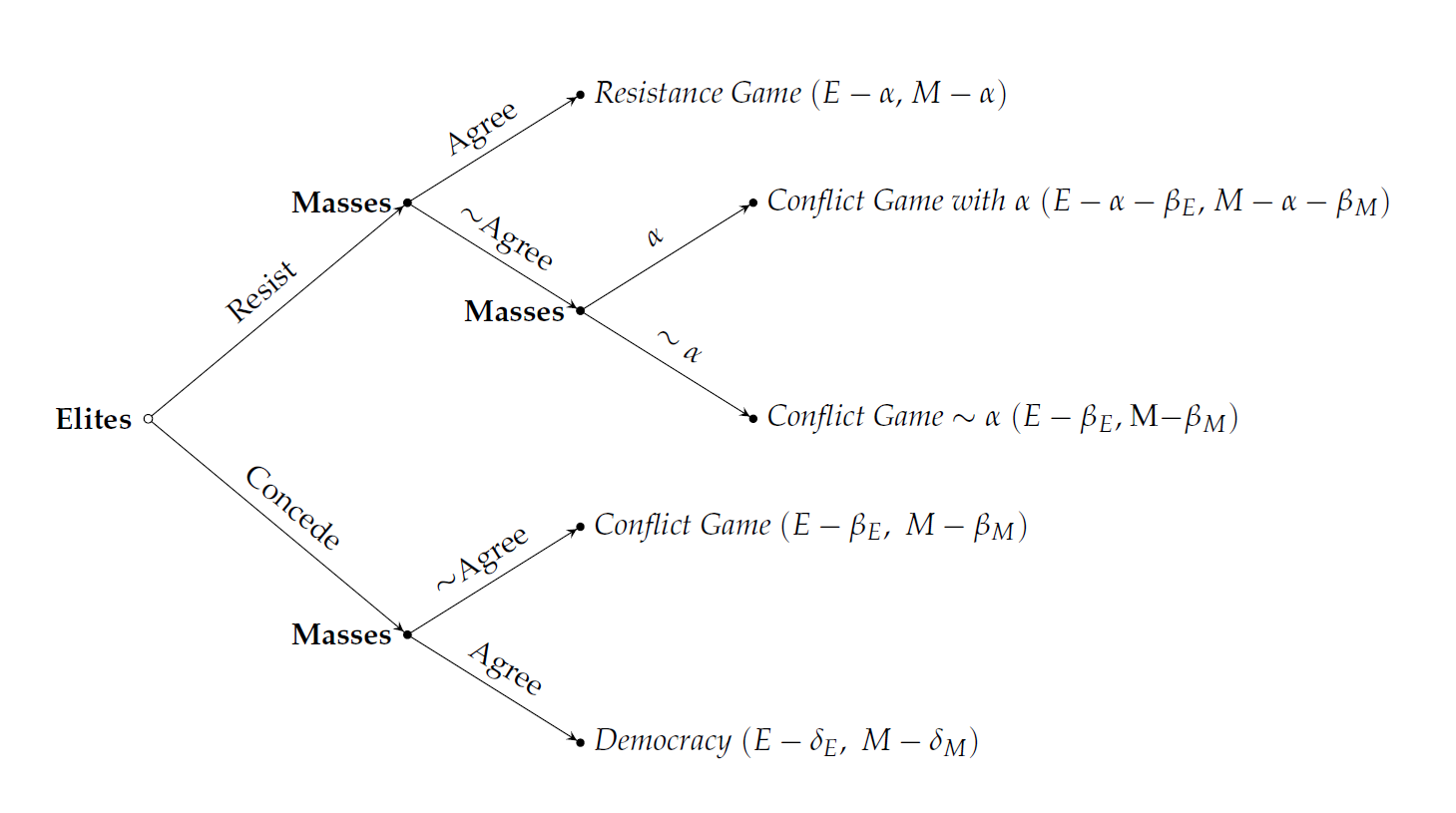 Fig 1. Economic sanction and democratization
| \(\beta_M > \delta_M > \alpha\) | Resist | Agree | \(\alpha > \delta_E\) | Democratization |
| Concede | Agree | |||
| \(\beta_M > \delta_M > \alpha\) | Resist | Agree | \(\alpha < \delta_E\) | Resistance |
| Concede | Agree | |||
| \(\beta_M > \alpha > \delta_M\) | Resist | Agree | \(\alpha > \delta_E\) | Democratization |
| Concede | Agree | |||
| \(\beta_M > \alpha > \delta_M\) | Resist | Agree | \(\alpha < \delta_E\) | Resistance |
| Concede | Agree | |||
| \(\alpha > \beta_M > \delta_M\) | Resist | Disagree | \(\beta_E > \delta_E\) | Democratization |
| Concede | Agree | |||
| \(\alpha > \beta_M > \delta_M\) | Resist | Disagree | \(\beta_E < \delta_E\) | Conflict |
| Concede | Agree | |||
| \(\alpha > \delta_M > \beta_M\) | Resist | Disagree | \(\beta_E\) = \(\beta_E\) | Conflict |
| Concede | Disagree | |||
| \(\delta_M > \alpha > \beta_M\) | Resist | Disagree | \(\beta_E\) = \(\beta_E\) | Conflict |
| Concede | Disagree | |||
| \(\delta_M > \beta_M > \alpha\) | Resist | Agree | \(\alpha > \beta_E\) | Conflict |
| Concede | disagree | |||
| \(\delta_M > \beta_M > \alpha\) | Resist | Agree | \(\alpha < \beta_E\) | Resistance |
| Concede | disagree |
Table 1. Possible Outcomes by Costs of Conflicts (\(\beta\)), Democratization (\(\delta\)) and Sanction (\(\alpha\))
Implications of Sanction Game
Table provides several implications under which conditions I can expect the target state is more likely to democratize.
For the first two shaded rows show the scenario that the costs of conflict of M is greater than other costs, M agrees with E regardless E choose to resist or concede.
However, E chooses to democratize only when the costs of sanction is greater than the costs of democratization (\(\alpha\) > \(\delta_E\)).
From these choices, we can draw an implication that when the costs of sanction are greater than the costs of democratization, the strategic interactions between M and E lead to the outcome—democratization.
In other words, it shows that sanction can drive elites to accept democratizaiton.
H1: If conflict against elites more costly than sanction, as long as the the costs of sanction is greater than the costs of democratization, democratization is more likely to occur.
The third row has different implication because it assumes that the costs of sanction are greater than the costs of conflict and democratization.
When the sanction is costly, the choice of M changes compared to the first two shaded rows.
M can decide to disagree against E when E decides to resist.
Thus, it implies that costly sanction can make M choose to fight against E. For E, as long as the costs of conflict is greater than the costs of democratization, it incentivizes E to accept democratization.
H2: If sanction is more costly than conflict against elites, as long as the conflict against masses is more costly than democratization for elites, democratization is more likely to occur.
It is noteworthy that how the same equilibrium of democratization driven by different mechanisms. The two hypotheses indicate that sanction can influence different actor to go to democratization. Thus, this uncovers the potential paths to democracy under the posed sanction. Whenever mass mobilization is not expected to occur, democratization might be possible due to the sanction. Given assumptions, these equilibria are the same since \(\alpha = \alpha_M\).
However, the second hypothesis is conditional on whether senders persist the economic sanctions or withdraw them.
If the costs of sanction are greater than the costs of democratization for M, it is possible that the costs of sanction might be less than the costs of democratization for E.
If democratization is not something that the senders care about, it might actually prevent target states from democratization.